Jump to section
- Start with the transaction, not a vehicle list
- Check the weight rating on the exact vehicle
- The 2026 SUV limit and bonus depreciation
- Build an eligibility file before a shopping list
- Separate a deduction from a tax saving
- Why leasing is a different comparison
- Calculate California treatment separately
- Prepare the questions your adviser needs to answer
- Compare before tax, then compare after advice
- Key takeaways
- Frequently asked questions
The quick guide
Before you decide
- Use the exact vehicle’s GVWR, not curb weight or a model nickname.
- A qualifying weight is only one part of eligibility.
- A deduction reduces taxable income; it does not make the car free.
Start with the transaction, not a vehicle list
A heavy SUV may receive different tax treatment from a lighter passenger vehicle, but a badge or advertised weight does not establish your deduction. First identify whether your business is buying or financing the vehicle, how it will be used and when it will be placed in service.
This guide is a preparation checklist for a conversation with your tax adviser. It is not a determination that a particular vehicle or taxpayer qualifies. Do not use a promised write-off to justify a vehicle or payment that does not work for the business before tax effects.
Check the weight rating on the exact vehicle
Gross vehicle weight rating, or GVWR, is the manufacturer’s maximum rated loaded weight. It is different from the vehicle’s curb weight. Photograph the certification label on the exact vehicle and record the VIN, model year and trim so your adviser can work from the car you are actually considering.
A model family can contain different specifications. Instead of treating a broad model list as tax certification, ask the dealer for documentation tied to the vehicle. If the weight threshold is essential to your decision, verify it before committing. A search result about another trim is not enough.
The IRS heavy-SUV dollar limit covers certain four-wheeled passenger vehicles rated above 6,000 pounds and not above 14,000 pounds gross vehicle weight. Vehicle-design exceptions and tax classification still matter; weight alone does not establish eligibility.
Source: IRS Publication 946: sport utility and certain other vehicles

The 2026 SUV limit and bonus depreciation
IRS Publication 946 states that the Section 179 limit for certain heavy SUVs placed in service in tax years beginning in 2026 is $32,000. It also describes 100% special depreciation for certain qualifying property acquired and placed in service after January 19, 2025. The rules have conditions; neither statement means every heavy SUV purchase receives a full deduction.
Build an eligibility file before a shopping list
Collect the purchase proposal, exact vehicle identification, weight documentation and intended in-service timing. Record the planned business use and ask what evidence you must maintain. Your adviser can then assess the applicable rules, limits, elections and any later consequences.
For a vehicle with mixed business and personal use, Section 179 generally requires more than 50% qualified business use in the year it enters service. Only the business-use portion of cost enters the deduction calculation, subject to applicable limits. During the recovery period, a drop to 50% or less qualified business use can trigger recapture of earlier deductions. Keep usage records and have your adviser apply the rules to the actual vehicle and transaction.
For vehicle shopping, start with the type of work the SUV must do: seating, cargo, access, towing if relevant and daily parking. Then check specific candidates. Familiar luxury SUV names can help start a search, but this guide deliberately does not certify an entire model range from one published specification.
Source: IRS Publication 946: business use and recapture
- Exact VIN, model year and specification.
- Manufacturer weight-rating documentation.
- Purchase or financing terms and total cost.
- Business-use plan and recordkeeping method.
- Adviser review of timing and eligibility.
- Exact vehicle
- Weight rating
- Business use
- Adviser review
A framework for your comparison—not a guarantee of eligibility or cost.
Separate a deduction from a tax saving
A deduction is not a refund of the purchase price. Consider a purely illustrative $20,000 deduction and a hypothetical applicable marginal rate of 25%: their product is $5,000. Whether any deduction is available and which rate matters are separate tax questions.
Also distinguish tax timing from economic cost. A large early deduction does not remove loan payments, insurance, energy costs or later consequences. Ask your adviser to show the effect over your intended holding period, including what happens if the vehicle is sold or its use changes. A first-year number is only part of the ownership decision.
Why leasing is a different comparison
In an ordinary lease, you are not treating the transaction as your vehicle purchase for Section 179 purposes. Business lease expenses follow their own rules. IRS business-car guidance discusses business-use allocation and potential adjustments for leased vehicles; ask your adviser which method applies.
Calculate California treatment separately
Federal depreciation amounts are not automatically California deductions. FTB states that California does not conform to federal bonus depreciation or the federal Section 179 maximum expense and phaseout amounts. Have your adviser calculate federal and California treatment separately for your entity rather than applying a federal write-off to both returns.
Source: California FTB: federal tax changes, Sections 70301 and 70306
Prepare the questions your adviser needs to answer
Bring the exact proposal rather than asking whether a model name is a write-off. Ask which vehicle classification applies, what business-use evidence is required, how the acquisition and in-service dates affect the analysis and which rules apply to your entity. Have the adviser identify any assumptions that would change the answer before you rely on a number.
Also ask about the years after purchase. A first-year deduction is one point in a longer ownership period. Your plan might include selling, trading, changing business use or keeping the SUV after the financing ends. Ask your adviser to explain the consequences of those scenarios in your circumstances. Keep the answer tied to your expected use rather than treating an acquisition-year figure as a complete financial model.
Finish the vehicle decision with a before-tax budget you can sustain. Include insurance for the intended use, service, tires, energy and the cost of financing where applicable. If the tax treatment changes after professional review, you should still understand what transportation you are buying and what cash it requires. That separation makes it easier to choose a useful business vehicle without overstating the value of a proposed deduction.
Compare before tax, then compare after advice
Request a purchase proposal and a lease proposal for vehicles that meet the same business need. Compare initial cash, recurring cash, insurance, mileage needs and the planned replacement date. This gives you a useful baseline before introducing tax assumptions.
Then have your adviser evaluate the proposals using your entity and records. If one option only looks affordable after an unverified tax result, keep investigating before signing. Our role in the vehicle comparison is to provide clear proposals and identify the exact car; the tax conclusion belongs to the professional reviewing your circumstances.
Take it with you
Key takeaways
- Use the exact vehicle’s GVWR, not curb weight or a model nickname.
- A qualifying weight is only one part of eligibility.
- A deduction reduces taxable income; it does not make the car free.
Put the assumptions in writing before comparing quotes.
Frequently asked questions
Is 6,000 pounds curb weight the test?
No. Use the applicable manufacturer GVWR and confirm the tax classification with your adviser.
Does every trim of a model qualify?
Do not assume so. Obtain the exact vehicle’s documentation and VIN.
Can I apply the purchase write-off to a normal lease?
An ordinary lease is a different transaction. Ask about business lease expenses rather than assuming a purchase deduction.
Does a $32,000 deduction save $32,000 in tax?
No. A deduction reduces taxable income, subject to the rules that apply. Its tax effect depends on your situation.
Sources & editorial notes
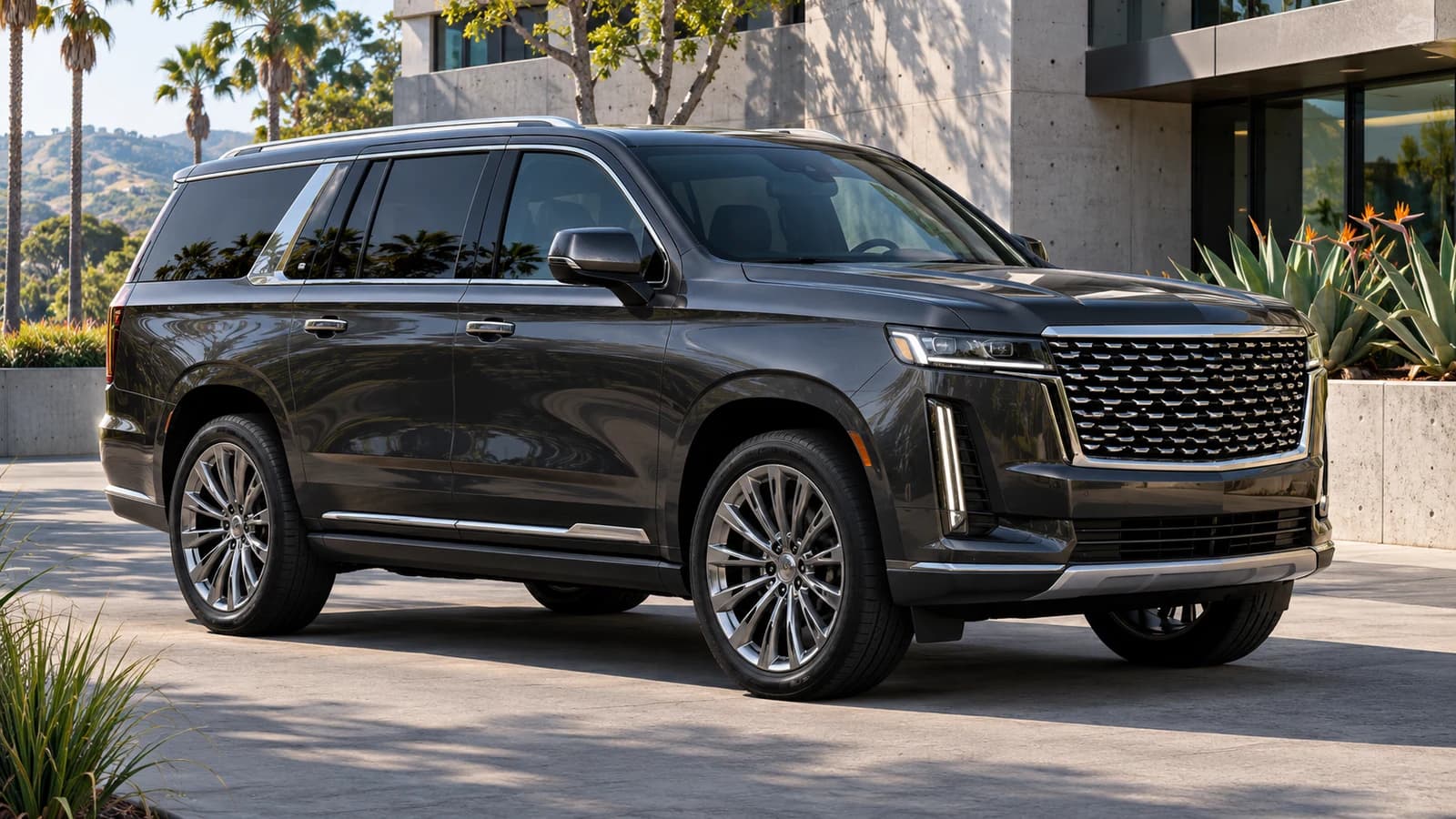
Sources checked November 6, 2026. Examples are illustrative unless identified otherwise. Vehicle photos do not certify inventory, eligibility or current offers.
Explore your options
Your next step
Put real numbers beside the advice.
Tell us the car, mileage and budget you have in mind. We’ll help compare the available options.
Get a clear quote ↗Explore current deals