Jump to section
- The sports car crossover reimagined: next-gen electric architecture versus proven combustion refinement
- Powertrains, 800V ultrafast charging, and chassis performance
- Lease finance dynamics: federal ,500 commercial pass-through versus gas residuals
- Priceless Porsche options and packages that dictate monthly payments
- Worked 36-month lease math on matching ,000 MSRP baselines
- Charging routine costs, maintenance expectations, and tire wear obligations
- How to make your final choice: Macan EV or gas Macan
- Key takeaways
- Frequently asked questions
The quick guide
Before you decide
- Choose the Porsche Macan EV if 800V ultra-fast DC charging, immediate dual-motor electric torque and the latest Porsche cockpit tech lead your criteria.
- Choose the gasoline Porsche Macan if traditional combustion soundtrack, long-range road trip convenience and lower baseline window stickers take priority.
- Porsche Financial Services passes through the ,500 commercial clean vehicle tax credit as a direct capitalized cost reduction on Macan EV leases, substantially narrowing the payment gap.
- Always compare quotes using identical annual mileage allowances and itemized cash-due-at-signing terms to assess genuine monthly ownership costs.
The sports car crossover reimagined: next-gen electric architecture versus proven combustion refinement
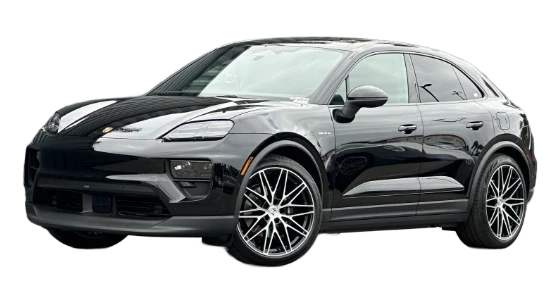
The Porsche Macan has long served as the sports car benchmark of the compact luxury SUV segment. With the introduction of the second-generation Macan built upon the dedicated Premium Platform Electric (PPE) architecture, Porsche has established a dual-track strategy, selling the all-new Macan Electric alongside the proven, celebrated first-generation gasoline Macan. For Southern California luxury drivers considering a multi-year lease, deciding between electric and internal combustion power involves weighing cutting-edge battery technology against combustion familiarity.
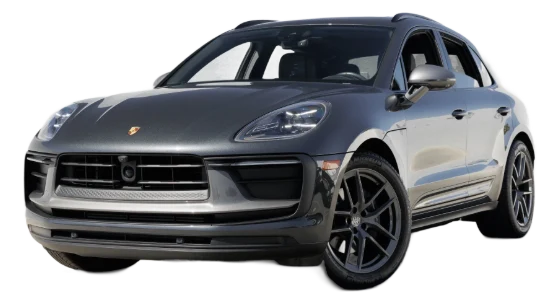
The Macan EV showcases dramatic aerodynamic proportions, an ultra-low center of gravity derived from floor-mounted battery packaging, and Porsche’s latest digital cockpit featuring an augmented-reality head-up display. Conversely, the gasoline Macan remains a masterclass in mechanical purity, delivering classic exhaust notes, analog instrument dials paired with touch displays, and uninterrupted refueling simplicity that requires no charging infrastructure adjustments.
Powertrains, 800V ultrafast charging, and chassis performance
Underneath their sculpted sheet metal, the driving dynamics represent two distinct eras of Porsche engineering. The base Macan 4 Electric features permanent-magnet synchronous dual motors generating 402 horsepower and 479 pound-feet of torque during overboost, catapulting from 0 to 60 mph in 4.9 seconds. Its 100-kWh gross battery pack operates at an 800-volt architecture capable of charging from 10% to 80% in approximately 21 minutes at compatible 270-kW DC fast chargers. The entry gasoline Macan employs a refined 2.0-liter turbocharged inline-four cylinder producing 261 horsepower and 295 pound-feet of torque mated to Porsche’s lightning-quick seven-speed PDK dual-clutch transmission.
On serpentine canyon roads in Malibu or Orange County, both crossovers handle with unmistakable Porsche precision. The Macan EV benefits from instantaneous electric torque vectoring and rear-axle steering that makes its curb weight vanish in tight hairpins. The gasoline Macan provides a lighter, more nimble front-end turn-in feel that appeals to traditional driving purists.
Source: Porsche Cars North America official Macan and Macan Electric specifications
| Performance & Architecture | Porsche Macan 4 Electric | Porsche Macan (Gasoline) |
|---|---|---|
| Powertrain System | Dual Permanent Magnet Synchronous Motors | 2.0L Turbocharged Inline-4 Cylinder |
| Power & Torque (Overboost) | 402 hp / 479 lb-ft | 261 hp / 295 lb-ft |
| Transmission Type | Single-speed transmission on each axle | 7-speed Porsche Doppelkupplung (PDK) |
| Drivetrain Configuration | Standard All-Wheel Drive with ePTM | Standard All-Wheel Drive with PTM |
| Charging / Refueling Capability | 800V architecture; up to 270 kW DC fast charging | Standard premium unleaded gasoline (19.8 gal tank) |
| Federal EV Incentive Availability | ,500 lease pass-through credit applicable | No federal or clean vehicle lease credits |
Lease finance dynamics: federal ,500 commercial pass-through versus gas residuals
Financial engineering heavily influences the monthly lease payment comparison between electric and gasoline Porsches. Although the Macan EV carries a higher manufacturer suggested retail price—starting around ,800 compared to approximately ,900 for a base gas Macan—Porsche Financial Services utilizes Section 45W commercial clean vehicle credits to apply a ,500 capitalized cost reduction directly into qualifying Macan EV lease contracts.
This ,500 incentive dramatically compresses the payment differential, effectively offsetting several thousand dollars of upfront vehicle price. Furthermore, Porsche Financial Services sets strong promotional residual values on early-generation electric models to support retail adoption. When negotiating lease terms, insist on verifying that the full ,500 credit is applied directly against the capitalized cost rather than absorbed into dealer markup or accessory padding.
Source: Internal Revenue Service (IRS) Section 45W Commercial Clean Vehicle Lease Credit Guidance
Priceless Porsche options and packages that dictate monthly payments
Porsche is renowned for its bespoke customization options, allowing buyers to add ,000 to ,000 in personalizing touches. In a vehicle lease, options that fail to preserve high residual values add their full dollar cost straight into your 36-month depreciation schedule.
On the Macan EV, high-demand options include the Premium Package Plus (14-way comfort seats with massage, panoramic roof, Bose Surround Sound), rear-axle steering, Porsche Active Suspension Management (PASM) with air suspension, and the Passenger Display. For the gasoline Macan, popular add-ons include 20-inch or 21-inch RS Spyder Design wheels, Sport Chrono Package, and adaptive sport seats. To ensure a balanced financial comparison, configure both vehicles with equivalent luxury amenities.
- Evaluate daily charging accessibility
- Factor ,500 EV lease incentive
- Audit optional equipment impact
- Compare scheduled service requirements
A framework for your comparison—not a guarantee of eligibility or cost.
Worked 36-month lease math on matching ,000 MSRP baselines
To see how electric incentives transform lease math, examine an illustrative comparison between a well-equipped Macan EV and an equivalently configured gasoline Macan, each carrying a window sticker MSRP of ,000 on a 36-month lease with 10,000 annual miles.
For the Macan EV, applying the ,500 federal clean vehicle lease credit reduces the net selling price from an assumed ,000 dealer discount down to an adjusted capitalized cost of ,500. Assuming a 58% captive residual value (,300 contract residual), net depreciation equals ,200. For the gasoline Macan, a negotiated selling price of ,000 without federal credits leaves a net capitalized cost of ,000. With a 59% residual (,150 contract residual), depreciation equals ,850. Under an illustrative tier-one money factor of 0.00240, the Macan EV generates a base payment of approximately per month versus ,080 per month for the gas Macan before local taxes, demonstrating that the federal tax credit can make the electric model more affordable on a monthly basis.
Source: Federal Reserve Consumer Guide to Vehicle Leasing and Depreciation Calculations
Charging routine costs, maintenance expectations, and tire wear obligations
Operating costs over 36 months introduce additional divergence between the two powertrains. Charging a Macan EV primarily at home during off-peak utility hours in Southern California yields substantial fuel savings compared to filling a gasoline Macan with premium 91-octane fuel. Furthermore, electric powertrains eliminate routine engine oil changes, spark plug services, and serpentine belt replacements.
However, electric vehicles exhibit higher instant torque and greater curb weights, leading to faster tire wear on wide rear contact patches. Porsche Financial Services requires returning leased vehicles with matching-specification N-rated Porsche tires possessing at least 4/32-inch remaining tread depth. Factoring tire life and charging installation costs alongside fuel savings guarantees a comprehensive operational budget.
How to make your final choice: Macan EV or gas Macan
The choice between the Porsche Macan EV and the gasoline Macan ultimately hinges upon your driving habits, charging convenience, and appetite for next-generation automotive technology.
Consider these closing factors before signing your lease contract:
- Select the Porsche Macan EV if you have reliable home or workplace Level 2 charging, appreciate instantaneous electric throttle punch, and wish to leverage the ,500 lease credit.
- Select the gasoline Porsche Macan if you take frequent long-distance road trips into rural areas, prefer traditional combustion sound and lighter turn-in feel, or do not wish to install a home charging unit.
- Request an itemized lease worksheet from your broker detailing gross capitalized cost, applied lease credits, money factor, residual dollar amount, and itemized drive-off cash.
- Explore whether placing Multiple Security Deposits (MSDs) can reduce your money factor interest charges across the 36-month lease duration.
Take it with you
Key takeaways
- Choose the Porsche Macan EV if 800V ultra-fast DC charging, immediate dual-motor electric torque and the latest Porsche cockpit tech lead your criteria.
- Choose the gasoline Porsche Macan if traditional combustion soundtrack, long-range road trip convenience and lower baseline window stickers take priority.
- Porsche Financial Services passes through the ,500 commercial clean vehicle tax credit as a direct capitalized cost reduction on Macan EV leases, substantially narrowing the payment gap.
- Always compare quotes using identical annual mileage allowances and itemized cash-due-at-signing terms to assess genuine monthly ownership costs.
Put the assumptions in writing before comparing quotes.
Frequently asked questions
Does the Porsche Macan EV qualify for the ,500 federal tax credit on a lease?
Yes. Under Section 45W of the Internal Revenue Code, leased electric vehicles qualify for the commercial clean vehicle tax credit regardless of manufacturing origin or retail price caps. Porsche Financial Services passes this ,500 credit directly to lessees as a capitalized cost reduction.
Is the Macan EV or gasoline Macan cheaper to lease in California?
Because of the ,500 federal lease pass-through credit and strong promotional residual values from Porsche Financial Services, similarly priced builds often result in the Macan EV leasing for equal or lower monthly payments than a comparable gasoline Macan.
Can the Macan EV use Tesla Superchargers?
Porsche is transitioning to the North American Charging Standard (NACS). Macan EV models utilizing CCS-to-NACS adapters or native ports can access compatible Tesla Supercharger stations alongside Electrify America and other 800V DC fast-charging networks.
How fast do tires wear out on the Macan EV compared to the gas Macan?
Due to instant electric torque delivery and a heavier curb weight, electric performance SUVs can wear out rear tires in 15,000 to 20,000 miles. Drivers should monitor tire tread depth closely to ensure tires meet the mandatory 4/32-inch minimum upon lease return.
Sources & editorial notes
Sources checked November 5, 2026. Examples are illustrative unless identified otherwise. Vehicle photos do not certify inventory, eligibility or current offers.
Explore your options
Your next step
Put real numbers beside the advice.
Tell us the car, mileage and budget you have in mind. We’ll help compare the available options.
Get a clear quote ↗Explore current deals