Jump to section
- The short answer: start with your week
- Make charging a real plan
- Compare the way each car fits your life
- Read the lease quotes on the same basis
- Understand what leasing does—and does not—solve
- Plan the trip you take four times a year
- Try a two-car shortlist instead of a powertrain argument
- Choose with three numbers and one test drive
- Key takeaways
- Frequently asked questions
The quick guide
Before you decide
- Charging access is the first decision; the lease payment comes next.
- Compare the full monthly bill on matching terms and mileage.
- Test your longest regular trip, not only your commute.
The short answer: start with your week
An electric car belongs on your shortlist when you can charge during time you would already spend at home, at work or at a reliable nearby stop. A gas car deserves equal consideration when refueling flexibility matters more than fitting charging into your week. Neither choice needs to be a statement about what every driver should do. It needs to work for you.
For a luxury lease, there are two separate decisions: which vehicle you enjoy and which contract makes sense. A quiet cabin or a strong advertised payment can be attractive, but neither fixes an inconvenient charging routine. Start by writing down where the car will sleep, how far you drive on a normal day, and how often a normal day becomes a long one.
Make charging a real plan
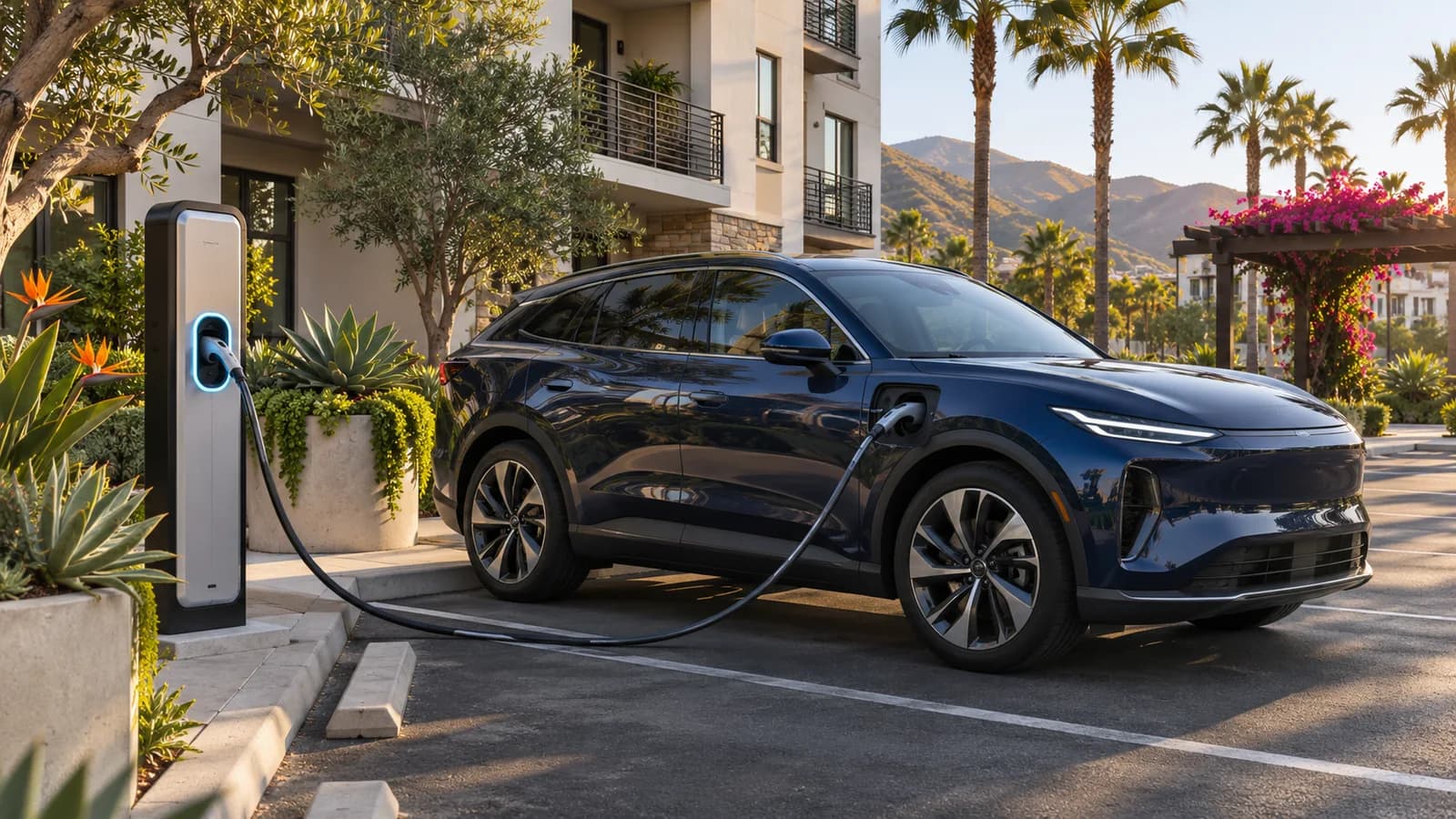
The useful question is not whether there are chargers near your ZIP code. It is whether you can use compatible chargers at the times you need them, at a price and time cost you accept. For an apartment resident in Los Angeles, a charger three blocks away may be convenient—or unusable during overnight parking restrictions.
Treat home, workplace and public charging as different plans. Ask who controls access, what happens when equipment is occupied, and where your backup is. DOE recommends considering daily driving and compatible charging along longer routes before choosing a vehicle.
Compare the way each car fits your life
Test-drive electric and gas candidates over the same route. Include the road surface, parking maneuver and highway merge you actually encounter. Try the seat adjustments, visibility and controls before focusing on acceleration. A lease is a daily experience for the whole term, not a short test of peak performance.
| Your priority | What to check in an EV | What to check in a gas car |
|---|---|---|
| Daily convenience | Dependable charging during existing downtime | Convenient fuel stops and required fuel grade |
| Long trips | Compatible stops, backup sites and charging time | Fuel range, stops and luggage space |
| Comfort | Ride, cabin noise and braking feel | Ride, engine sound and transmission response |
| Budget | Lease quote plus charging and setup | Lease quote plus fuel and service |
Read the lease quotes on the same basis
Ask for the exact trim, term, annual mileage, total drive-off, monthly tax treatment and all fees in each quote. Match these inputs before deciding that the electric or gas option is cheaper. A different mileage allowance can make the payment look better while shifting a cost to the end.
Here is a budgeting example, not a live offer: $800 a month for 36 months with no additional upfront cost totals $28,800. A $750 payment with $3,600 of additional upfront cost totals $30,600. The second advertisement looks cheaper; the scheduled cash cost is higher. When the first payment is included in drive-off, count it only once. Use the cost guide below to add running expenses.
- Charging access
- Driving routine
- Matching quotes
- Test drive
A framework for your comparison—not a guarantee of eligibility or cost.
Understand what leasing does—and does not—solve
In a typical closed-end lease, you can return the car at the end subject to the contract. That changes how you experience resale uncertainty compared with owning the car. It does not remove mileage, condition, insurance, maintenance or early-exit obligations. Read those terms regardless of the powertrain.
Source: CFPB: leasing versus buying
Plan the trip you take four times a year
A commute can fit an EV comfortably while a regular mountain visit or family trip takes more planning. Trace that actual route before choosing the car. Look for a workable backup stop rather than assuming the first location will always be available. Check manufacturer guidance for the exact model year, connector and any required adapter.
Leave room for real conditions. Your starting charge, luggage, weather and route all belong in the plan. If the proposed stops feel reasonable, the trip may work well. If you already resent the schedule on paper, include that inconvenience in the decision rather than expecting the monthly payment to make it disappear.
Try a two-car shortlist instead of a powertrain argument
Pick one electric car and one gas car you would genuinely be happy to drive. Give them the same practical brief: passenger space, luggage, parking footprint, comfort and equipment. This prevents a comparison in which one side is an idealized car and the other is simply the cheapest alternative. If a feature is essential, include it on both proposals or state the difference explicitly.
Next, describe a demanding but ordinary day: a full commute, an unexpected errand and an evening commitment. For the electric car, identify when it would charge and how much extra time that requires. For the gas car, identify the fuel stop. You are comparing the burden of two actual routines rather than assuming either one is effortless.
Finally, write a one-sentence reason for choosing each candidate. One might offer the cabin and charging convenience you prefer; the other might offer more flexible long-distance use. Attach the total monthly budget to those reasons. If you cannot explain the choice without quoting an advertisement, return to the test drive and the routine. That extra clarity can prevent three years of wishing you had chosen differently.
Choose with three numbers and one test drive
Bring us your monthly budget, annual mileage and acceptable drive-off, plus the two cars you would actually choose. Tell us whether your charging plan is home, work or mostly public. We can compare current quotes on the same basis so you can judge the cost alongside the car.
Use the detailed cost article for the math and the home-charging article if access is uncertain. If neither electric nor gas alone fits your situation, include a hybrid in your search. Compare a plug-in hybrid with a real charging plan rather than assuming its electric driving happens automatically.
Take it with you
Key takeaways
- Charging access is the first decision; the lease payment comes next.
- Compare the full monthly bill on matching terms and mileage.
- Test your longest regular trip, not only your commute.
Put the assumptions in writing before comparing quotes.
Frequently asked questions
Is an EV always cheaper to lease?
No. Compare the actual quote and your running costs. A payment advantage can be reduced by insurance, charging fees or upfront setup costs.
Can I lease an EV if I live in an apartment?
Yes, if you have a practical charging routine. Confirm access, costs, compatibility and a backup before committing.
Does leasing remove battery concerns?
It does not replace the need to understand the vehicle warranty, charging instructions and return conditions. Ask for those documents for the exact car.
Should I choose by advertised range?
Use range as one input. Your regular routes, charging access and acceptable stops determine whether the car fits.
Sources & editorial notes
Sources checked November 5, 2026. Examples are illustrative unless identified otherwise. Vehicle photos do not certify inventory, eligibility or current offers.
Your next step
Put real numbers beside the advice.
Tell us the car, mileage and budget you have in mind. We’ll help compare the available options.
Get a clear quote ↗Explore current deals