Jump to section
- The luxury midsize benchmark: brand prestige versus lease economics
- Powertrains, acceleration, and real-world driving dynamics
- Cabin craftsmanship, ergonomic technology, and passenger utility
- Standard specifications, options pricing, and configuration costs
- Financial breakdown: captive finance residuals, money factors, and discounts
- Routine maintenance schedules, tire replacement, and lease-end obligations
- Final verdict: which luxury midsize SUV should you lease?
- Key takeaways
- Frequently asked questions
The quick guide
Before you decide
- The BMW X5 delivers significantly lower monthly payments due to aggressive dealer discounting and subsidized captive money factors.
- The Porsche Cayenne commands a premium monthly lease rate but offers unmatched sports-car handling, bespoke customization, and stronger long-term residual percentages.
- A well-negotiated BMW X5 lease typically saves $350 to $600 per month compared to a similarly equipped Porsche Cayenne.
The luxury midsize benchmark: brand prestige versus lease economics
In the premier tier of European luxury midsize sport-utility vehicles, the Porsche Cayenne and the BMW X5 stand as the undisputed reference points. Both German manufacturers have refined their flagship two-row crossover platforms over more than two decades, producing vehicles that effortlessly balance family cargo capability, executive road presence, and high-speed highway composure. However, when transitioning from an outright cash purchase to a 36-month closed-end lease, the financial realities of these two machines diverge sharply.
A lease payment is fundamentally governed by the spread between the negotiated capitalized cost and the contract residual value, combined with the financier's interest charge (the money factor). While the base Porsche Cayenne and BMW X5 xDrive40i carry starting manufacturer suggested retail prices (MSRP) separated by roughly twenty thousand dollars, the disparity in monthly lease payments is frequently much wider. BMW Financial Services routinely subsidizes lease transactions through promotional interest subvention, corporate fleet programs, and substantial dealer volume allowances. In contrast, Porsche Financial Services maintains disciplined production volumes and limited retail incentives, positioning the Cayenne as an exclusive luxury asset where lessees absorb the full cost of ownership.
Powertrains, acceleration, and real-world driving dynamics
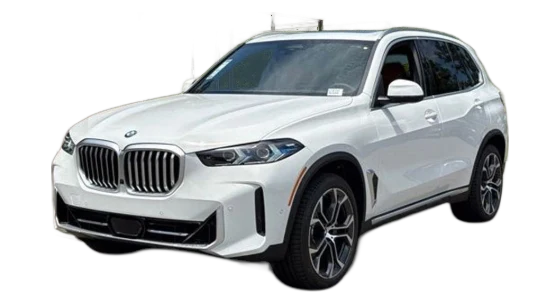
Behind the wheel, the engineering priorities of Zuffenhausen and Munich become immediately apparent. The core volume trim of the BMW X5—the xDrive40i—is powered by BMW's acclaimed B58 3.0-liter turbocharged inline-six engine paired with a 48-volt mild-hybrid system, producing 375 horsepower and 398 pound-feet of torque. Power delivery is silky, immediate, and effortlessly routed through a ZF eight-speed automatic transmission. For drivers seeking greater electric efficiency, the X5 xDrive50e plug-in hybrid integrates an electric motor to generate a combined 483 horsepower and approximately 40 miles of all-electric commuting range.
The standard Porsche Cayenne features a 3.0-liter turbocharged hot-vee V6 generating 348 horsepower and 368 pound-feet of torque. While peak horsepower numbers appear modest on paper next to the BMW, Porsche's chassis calibration, steering feedback, and standard steel-spring or optional adaptive air suspension deliver a distinctly athletic persona. The Cayenne resists body roll with sports-car tenacity and provides surgical front-axle placement through tight canyon curves. Stepping into the Cayenne E-Hybrid elevates total system output to 463 horsepower, though its electric-only range of approximately 28 miles trails the plug-in X5.
On daily highway commutes, the BMW X5 prioritizes effortless acoustic isolation, pillowy bump absorption, and seamless power delivery. The Porsche Cayenne remains composed and comfortable, but transmits greater road surface communication and driver involvement. If you desire an SUV that genuinely handles like a tall sports car, the Cayenne stands alone; if you prioritize soothing long-distance touring comfort, the X5 is an exceptionally accomplished companion.
Source: U.S. EPA Fuel Economy & Greenhouse Gas Ratings for Midsize Luxury Utility Vehicles
Cabin craftsmanship, ergonomic technology, and passenger utility
Inside the cabin, each brand approaches luxury ergonomics through distinct philosophical lenses. The BMW X5 features the striking BMW Curved Display, uniting a 12.3-inch digital instrument cluster and a 14.9-inch infotainment touchscreen beneath a continuous glass surface running BMW Operating System 8.5. The system offers wireless Apple CarPlay and Android Auto, augmented reality navigation, and intuitive voice recognition alongside the physical iDrive rotary controller on the center console.
The Porsche Cayenne interior mirrors the high-tech cockpit design pioneered by the Taycan. A curved 12.6-inch fully digital driver instrument display is complemented by a 12.3-inch central touchscreen, with an optional 10.9-inch passenger display allowing front-seat co-pilots to stream video or assist with route planning. Porsche maintains tactile physical toggle switches for HVAC temperature controls, striking an exquisite balance between digital screens and mechanical precision.
Regarding spatial practicality, the BMW X5 holds a decisive advantage in cargo hauling. The X5 provides 33.9 cubic feet of cargo volume behind the second row, expanding to 72.3 cubic feet with the rear seats folded flat. Furthermore, BMW's signature two-piece split clamshell tailgate provides a lower loading ledge that doubles as a sturdy tailgate bench supporting up to 550 pounds. The Porsche Cayenne offers 27.2 cubic feet of cargo space behind the rear seats, expanding to 60.3 cubic feet. Both vehicles seat five passengers in complete comfort, though the X5 offers slightly greater rear passenger headroom.
Standard specifications, options pricing, and configuration costs
A critical pitfall when leasing a Porsche Cayenne is options depreciation. Porsche equips the baseline Cayenne conservatively, encouraging buyers to personalize their build through an extensive options catalog. Adding popular selections such as the Premium Package Plus (panoramic roof, 14-way ventilated seats, 4-zone climate control), 21-inch RS Spyder wheels, adaptive air suspension, and full leather upholstery can easily add $20,000 to $30,000 to the vehicle's window sticker.
Because captive finance companies apply residual percentages to the total vehicle MSRP, every option on a Cayenne raises both the residual and the depreciation amount. However, heavily optioned Porsches rarely recover their full option value on the secondary market, meaning captive residuals for highly optioned cars may not adjust favorably. In contrast, the BMW X5 bundles high-demand features into predictable packages (such as the M Sport Package, Premium Package, and Executive Package), and BMW dealers frequently discount these configurations by 6% to 9% off MSRP prior to applying lease programs.
| Vehicle Feature & Specification | Porsche Cayenne (Base / E-Hybrid) | BMW X5 (xDrive40i / xDrive50e) |
|---|---|---|
| Base Powertrain | 3.0L Turbo V6 (348 hp / 368 lb-ft) | 3.0L Turbo Inline-6 (375 hp / 398 lb-ft) |
| Plug-In Hybrid Option | Cayenne E-Hybrid (463 hp / ~28 mi EV range) | X5 xDrive50e (483 hp / ~40 mi EV range) |
| Cargo Capacity (Rear / Max) | 27.2 cu. ft. / 60.3 cu. ft. | 33.9 cu. ft. / 72.3 cu. ft. (Split Tailgate) |
| Typical Starting MSRP | $80,800 to $98,000 (Before Options) | $68,000 to $76,500 (Well-Equipped) |
| Typical 36-Month Lease Payment | $1,250 - $1,650 / month + tax | $899 - $1,150 / month + tax |
| Typical Drive-Off Capital Required | First month + bank fee + $2,500-$5,000 cap reduction | First month + bank fee + local registration ($1,500-$2,500) |
| Chassis & Handling Character | Sports car agility, razor-sharp steering feedback | Plush luxury cruising, effortless highway isolation |
- Assess monthly payment ceiling ($950 vs $1,400+)
- Evaluate driving dynamics vs. cargo utility needs
- Factor complimentary maintenance vs. paid service costs
- Compare 36-month captive residual and money factor terms
A framework for your comparison—not a guarantee of eligibility or cost.
Financial breakdown: captive finance residuals, money factors, and discounts
To comprehend the monthly payment gap between these two luxury SUVs, examine a representative 36-month lease comparison with a 10,000-mile annual allowance.
Consider a BMW X5 xDrive40i carrying an MSRP of $76,500. Through competitive broker sourcing, an experienced leasing broker can secure an 8% dealer discount, lowering the selling price to $70,380. BMW Financial Services typically assigns a 36-month residual value around 54% ($41,310) and offers promotional tier-one money factors near 0.00190 (equivalent to approximately 4.56% APR). The resulting depreciation cost is $29,070, yielding a monthly base payment of roughly $945 per month before local sales tax.
Now consider a Porsche Cayenne with an MSRP of $92,000. Porsche dealer allocations on newly configured vehicles rarely see discounts exceeding 2% to 4%, yielding a selling price around $89,240. Porsche Financial Services assigns a residual value around 57% ($52,440), resulting in $36,800 in total vehicle depreciation. Crucially, Porsche's captive money factor is often set between 0.00280 and 0.00320 (6.72% to 7.68% APR). The higher financing rate combined with larger absolute depreciation produces a base lease payment of roughly $1,420 per month before tax. In total, the Cayenne lessee pays approximately $17,000 more in scheduled payments over the course of three years.
Source: Consumer Financial Protection Bureau: Understanding Automotive Lease Depreciation & Rent Charges
Routine maintenance schedules, tire replacement, and lease-end obligations
Operating costs over a 36-month lease term further influence the total economic calculation. BMW provides 'BMW Ultimate Care' standard on all new leased models, covering factory-recommended scheduled maintenance (oil changes, brake fluid flushes, cabin micro-filters, and vehicle inspections) for the first three years or 36,000 miles at zero additional charge.
Porsche does not include complimentary scheduled maintenance with new vehicle leases. Porsche factory service intervals occur every 10,000 miles or one year, with major services at 20,000 and 30,000 miles involving extensive brake inspections, spark plug renewals, and complex fluid changes. Over three years, routine Porsche Cayenne maintenance performed at an authorized dealership will typically cost between $2,000 and $3,500 unless the customer prepays for a Porsche Scheduled Maintenance Plan (PSMP) rolled into the lease capitalization.
Both vehicles are equipped with staggered performance tires on 20-inch or 21-inch wheel fitments. Performance all-season and summer compound tires on midsize luxury SUVs typically last between 20,000 and 28,000 miles under normal driving conditions. Lessees should anticipate replacing at least one set of rear tires prior to vehicle inspection turn-in. Both BMW Financial Services and Porsche Financial Services mandate minimum remaining tire tread depth of 4/32 of an inch and require matching original equipment manufacturer (OEM) tire ratings upon lease return.
Final verdict: which luxury midsize SUV should you lease?
Both the Porsche Cayenne and the BMW X5 are exceptional luxury sport-utility vehicles, but they cater to fundamentally different client priorities and lease budgets.
Use the following decision matrix to determine your best choice:
- Choose the BMW X5 if you want the best financial value in the segment, superior cargo volume with the practical split tailgate, three years of complimentary maintenance, and a monthly payment under $1,050.
- Choose the Porsche Cayenne if driving dynamics, peerless steering feedback, and bespoke luxury pedigree are your primary requirements, and you are comfortable committing to a $1,350+ monthly lease payment.
- Request an itemized lease worksheet from your broker detailing gross capitalized cost, dealer discount, money factor interest rate, and itemized drive-off fees.
- Consider placing Multiple Security Deposits (MSDs) on the BMW X5 lease to buy down the money factor and save thousands in interest charges over 36 months.
Take it with you
Key takeaways
- The BMW X5 delivers significantly lower monthly payments due to aggressive dealer discounting and subsidized captive money factors.
- The Porsche Cayenne commands a premium monthly lease rate but offers unmatched sports-car handling, bespoke customization, and stronger long-term residual percentages.
- A well-negotiated BMW X5 lease typically saves $350 to $600 per month compared to a similarly equipped Porsche Cayenne.
Put the assumptions in writing before comparing quotes.
Frequently asked questions
Why is the Porsche Cayenne so much more expensive to lease than the BMW X5?
Porsche Financial Services sets higher captive money factors (interest rates) and Porsche dealerships offer minimal dealer discounts due to tightly controlled inventory. In contrast, BMW offers aggressive factory subvention, dealer volume discounts, and complimentary 3-year maintenance that significantly lower the monthly payment.
Does the BMW X5 include free maintenance on a lease?
Yes. All new BMW X5 models come with BMW Ultimate Care, which covers factory-scheduled maintenance including oil changes, engine filter replacements, and brake fluid flushes for 3 years or 36,000 miles.
Is the Porsche Cayenne or BMW X5 better for a family road trip?
The BMW X5 is generally more practical for family road trips due to its larger cargo capacity (33.9 vs. 27.2 cubic feet), superior rear legroom, softer long-distance suspension tuning, and versatile split-folding tailgate.
Can I lower my lease payment on a Cayenne or X5 using Multiple Security Deposits?
BMW Financial Services allows up to seven Multiple Security Deposits (MSDs), which significantly lower the money factor and generate high annualized returns on your deposited capital. Porsche Financial Services rarely supports MSD programs in the United States.
Sources & editorial notes
Sources checked November 5, 2026. Examples are illustrative unless identified otherwise. Vehicle photos do not certify inventory, eligibility or current offers.
Explore your options
Your next step
Put real numbers beside the advice.
Tell us the car, mileage and budget you have in mind. We’ll help compare the available options.
Get a clear quote ↗Explore current deals