Jump to section
- Start with the complete California quote
- Understand why there is no single registration price
- Check the tax treatment of the lease
- Use a simple example without treating it as a rate quote
- Separate registration from dealer and broker services
- Do not overlook the cost of a later buyout
- Handle moves and out-of-state offers explicitly
- Request the numbers needed to decide
- Key takeaways
- Frequently asked questions
The quick guide
Before you decide
- Taxes and registration are separate parts of the quote.
- Use the actual registration address and vehicle information.
- Compare tax-inclusive payments and itemized signing amounts.
Start with the complete California quote
A lease payment advertised without your registration details is a starting point, not necessarily the amount you will pay. Ask for the base payment, tax treatment, total signing amount and registration estimate separately. Confirm the address at which the car will actually be registered and principally used with the dealer. A broker’s office location or the dealership’s city should not become a shortcut for entering your details. Keeping the components visible lets you compare offers from different dealers without mistaking a tax or registration difference for a better vehicle price.
Understand why there is no single registration price
California DMV describes registration charges as dependent on information including vehicle value, type, location and dates. Its calculators provide estimates based on the details entered. Use the exact vehicle and transaction information rather than a friend’s renewal bill. A new luxury SUV and an older sedan need not produce similar amounts. Ask the dealer which portions are estimated, how any difference will be reconciled and who handles the registration submission. A quote that includes an estimate can still be useful if its assumptions and settlement process are clear.
Check the tax treatment of the lease
California lease taxation follows rules that depend on the transaction and the lessor’s treatment of the property. Ask how the lessor applies the current rules to periodic payments, upfront amounts and any separately supplied products. CDTFA Regulation 1660 is a primary reference for lease taxation, but a general guide cannot determine every individual contract’s treatment. Avoid applying a single tax percentage to the vehicle’s full sticker price and calling that your lease tax. Request the actual tax-inclusive payment and a separate signing breakdown from the party preparing the agreement.
Source: CDTFA: Regulation 1660 on leases
Use a simple example without treating it as a rate quote
For arithmetic only, suppose a hypothetical taxable payment is $700 and the applicable illustrative rate is 9.5%. That component would add $66.50, producing $766.50. Neither $700 nor 9.5% is a current offer or a rate assigned to your address. The example excludes registration, possible taxable upfront amounts and other charges. Its purpose is to show why comparing a tax-exclusive $700 advertisement with another dealer’s tax-inclusive number is unreliable. Ask both providers to state the actual payment for the same registration details and the same treatment of signing costs.
- Confirm address
- Separate payment tax
- Estimate registration
- Reconcile the contract
A framework for your comparison—not a guarantee of eligibility or cost.
Separate registration from dealer and broker services
Do not place every signing amount under the heading DMV. Ask which amounts are government charges, which are dealer services, which are broker services and which are payments under the lease. If a dealer is collecting estimated registration, ask how the actual result will be documented. If delivery or paperwork coordination is billed separately, identify that as its own item. This distinction is useful even when you are comfortable paying the quoted total: it lets you see what changed if a corrected address or replacement vehicle produces a revised proposal.
Do not overlook the cost of a later buyout
A scheduled lease return and a purchase at lease end are different transactions. If buying the car is a realistic plan, ask how the purchase option, associated charges and applicable tax would be handled rather than assuming all tax was settled in the lease payments. CDTFA provides guidance on vehicle purchases and lease buyouts. Keep that future purchase scenario separate from the cost of returning the car on schedule. If you later receive a buyout quote, check its date, included amounts and registration instructions before comparing it with a market valuation.
Handle moves and out-of-state offers explicitly
Tell the dealer if you expect to move during the term or are comparing a vehicle located outside California. Ask the lessor and the relevant registration authority which steps apply rather than entering an address chosen to reproduce someone else’s advertised number. Registration, emissions eligibility, insurance and tax handling are separate workstreams. A cheap out-of-state payment can lose its appeal after delivery and administrative costs are considered. Resolve the feasibility before making a nonrefundable commitment, particularly when a vehicle cannot easily be returned to the supplying dealer.
Request the numbers needed to decide
Give LuxConcierge the exact model, term, annual mileage, actual registration ZIP code and preferred drive-off. Ask for a quote that identifies tax-inclusive payment, itemized signing amounts, registration assumptions and separately billed services. Confirm who will file the documents and what happens if an estimate changes. Before signing, compare the final VIN and figures with that proposal. This guide helps organize the questions; the dealer or lessor must establish the applicable transaction treatment. For a tax determination specific to unusual circumstances, use CDTFA guidance or an appropriate tax professional.
- Use the actual registration details rather than the broker or dealership address.
- Request both the base payment and the complete tax-inclusive payment.
- Ask which registration amounts are estimates and how differences are settled.
- Identify dealer, broker and delivery charges separately from government charges.
- Treat a possible buyout as its own future transaction and cost comparison.
Take it with you
Key takeaways
- Taxes and registration are separate parts of the quote.
- Use the actual registration address and vehicle information.
- Compare tax-inclusive payments and itemized signing amounts.
Put the assumptions in writing before comparing quotes.
Frequently asked questions
Does every California driver pay the same lease tax?
Do not use one statewide assumption for every quote. Supply the actual address and ask the dealer or lessor to explain the applicable tax treatment and resulting payment for your transaction.
Can I estimate registration from another car’s bill?
That is a weak comparison because vehicle and transaction details differ. Use DMV’s calculator with accurate inputs, then ask the dealer how the final charges and any estimate reconciliation will be documented.
Are taxes already included in an advertised lease payment?
Check the offer disclosures and request an individualized quote. Ask for base and tax-inclusive amounts explicitly so a promotional number is not compared with another quote that already includes tax.
Is a lease buyout tax-free because I already paid monthly tax?
Do not assume so. A buyout is a separate purchase scenario. Review the current CDTFA guidance and your written buyout quote to establish which taxes and fees apply.
Sources & editorial notes
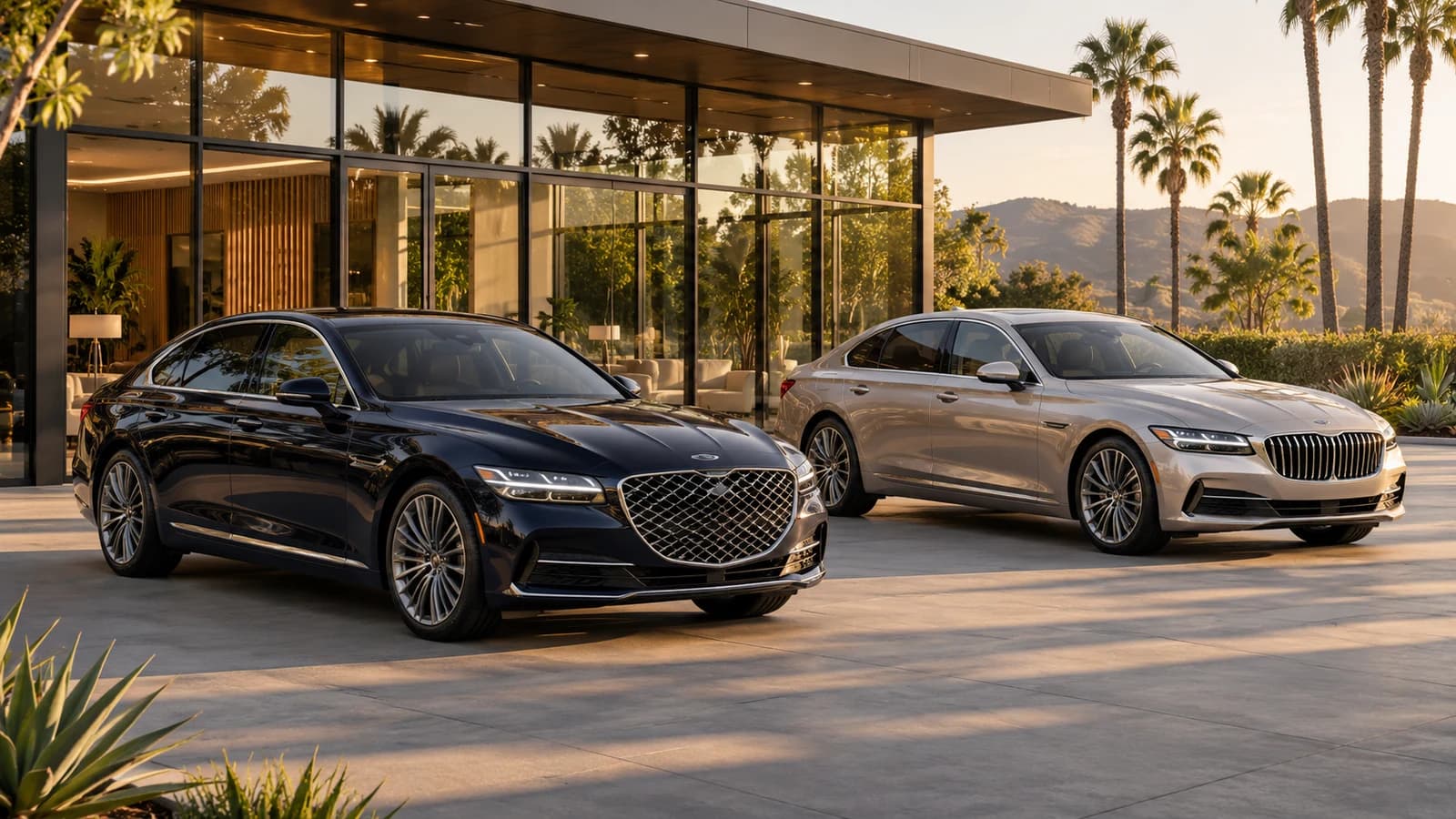
Sources checked November 5, 2026. Examples are illustrative unless identified otherwise. Vehicle photos do not certify inventory, eligibility or current offers.
Explore your options
Your next step
Put real numbers beside the advice.
Tell us the car, mileage and budget you have in mind. We’ll help compare the available options.
Get a clear quote ↗Explore current deals